Advantages, Disadvantages, and Applications of Austenitic Stainless Steels: A Case Study of Alloy 31
May 13, 2025
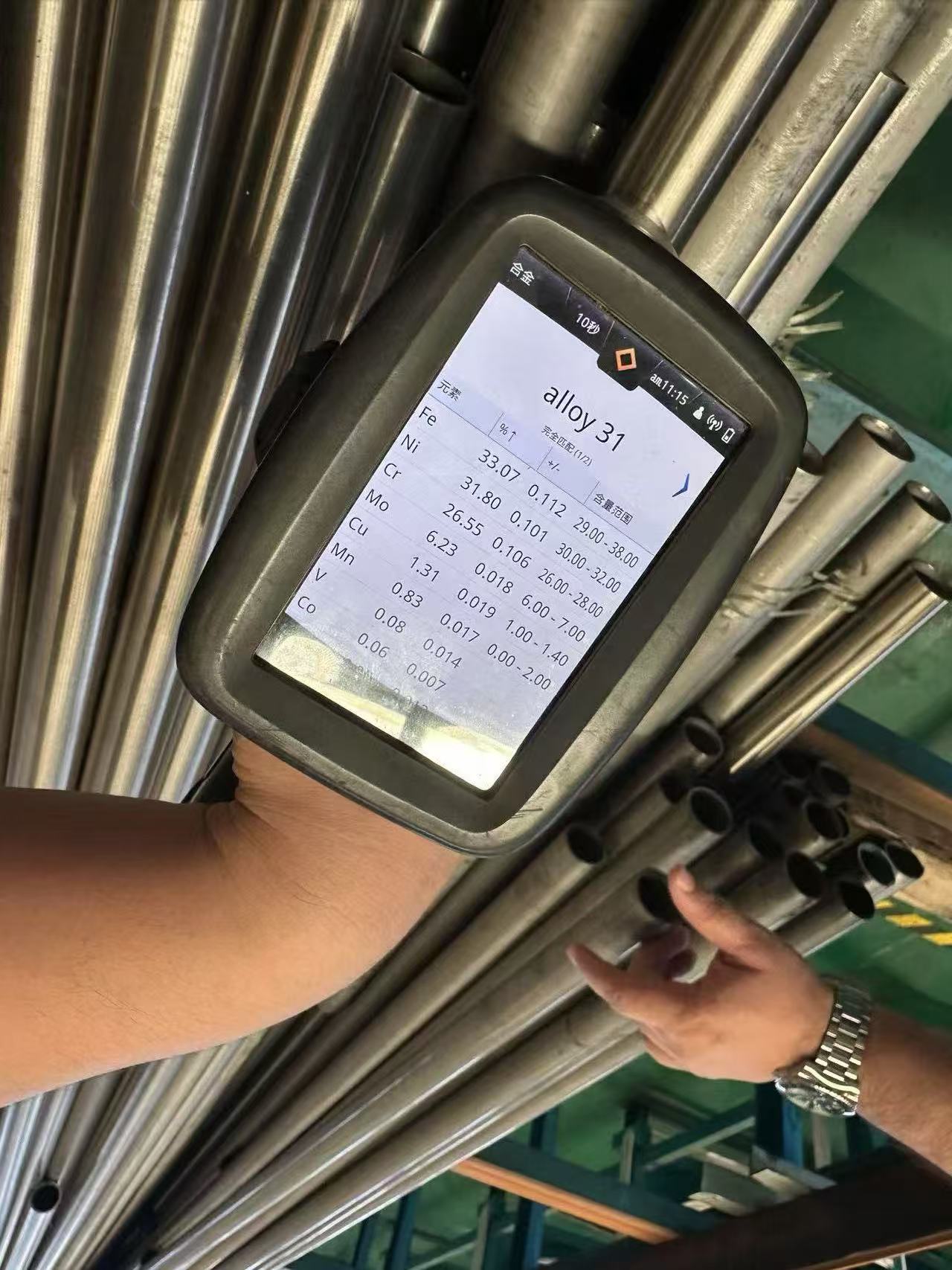
Austenitic stainless steels represent the most widely used category of stainless steels, known for their excellent corrosion resistance, good mechanical properties, and formability. Among them, Alloy 31 (UNS N08031, 1.4562) stands out as a high-performance material engineered for extremely corrosive environments. This article explores the general characteristics of austenitic stainless steels, highlighting their advantages, limitations, and real-world applications, with Alloy 31 as a key example.
Advantages of Austenitic Stainless Steels
- Superior Corrosion Resistance
Due to high chromium and nickel content, austenitic stainless steels resist corrosion from a wide range of chemicals, including acids and chlorides. Alloy 31, for instance, excels in sulfuric acid, phosphoric acid, and seawater.
- Excellent Toughness and Ductility
These steels maintain strength and impact resistance even at cryogenic temperatures, making them suitable for extreme environments.
- Good Weldability and Formability
Austenitic grades can be easily welded and formed into complex shapes without losing mechanical integrity. Alloy 31 can be fabricated using standard techniques.
- Non-magnetic Properties
In annealed condition, austenitic steels are generally non-magnetic, which is beneficial in certain sensitive applications such as medical or electronic equipment.
Disadvantages of Austenitic Stainless Steels
- Higher Cost
Their elevated nickel and sometimes molybdenum content increases raw material costs. Alloy 31, being a super austenitic stainless steel, is significantly more expensive than common grades like 304 or 316.
- Poor Wear Resistance
Austenitic steels are not ideal for abrasive environments as they have relatively low hardness and wear resistance.
- High Thermal Expansion
These steels exhibit a greater thermal expansion coefficient, which may lead to distortion or dimensional instability in high-temperature cycles.
- Susceptibility to Stress Corrosion Cracking (SCC)
Especially in chloride-rich and high-stress conditions, austenitic stainless steels can suffer from SCC, although Alloy 31 offers improved resistance.
Applications of Austenitic Stainless Steels (Alloy 31 as Example)
Thanks to their excellent corrosion resistance and formability, austenitic stainless steels are used in a wide range of industries. Alloy 31 is specifically designed for highly corrosive environments where standard stainless steels fail.
Typical Applications of Alloy 31:
| Industry | Application & Benefits |
|---|---|
| Chemical Processing | Reactors, heat exchangers, piping – excellent acid resistance |
| Desalination Plants | Brine heaters, evaporators – resists pitting and crevice corrosion |
| Flue Gas Desulfurization (FGD) | Scrubbers, ducts – withstands acidic condensates |
| Pharmaceutical & Food Industry | Contact equipment – high purity and hygiene |
| Mining & Metallurgy | Leaching tanks, acid pipelines – durable in chloride-rich slurries |
Conclusion
Austenitic stainless steels are invaluable across many industrial sectors due to their balance of corrosion resistance, mechanical strength, and manufacturability. Alloy 31, as a super austenitic grade, demonstrates the upper performance limits of this class, providing reliable service in some of the harshest environments imaginable. However, users must weigh the benefits against the cost and certain performance limitations when choosing the appropriate grade.
FAQs
What are high-temperature alloys made of?
Nickel, cobalt, or titanium are regularly used to craft high-temperature alloys. These metals can withstand highly high warmth without losing strength.
Why are high-temperature alloys used in jet engines?
Jet engines create severe warmth once they burn gas. High-temperature alloys are used because they may resist melting and remain robust under these conditions.
Can high-temperature alloys be utilized in spacecraft?
Yes, high-temperature alloys are essential in spacecraft. They are used for elements like high-temperature shields and rocket engines, which face extreme heat and are bloodless.