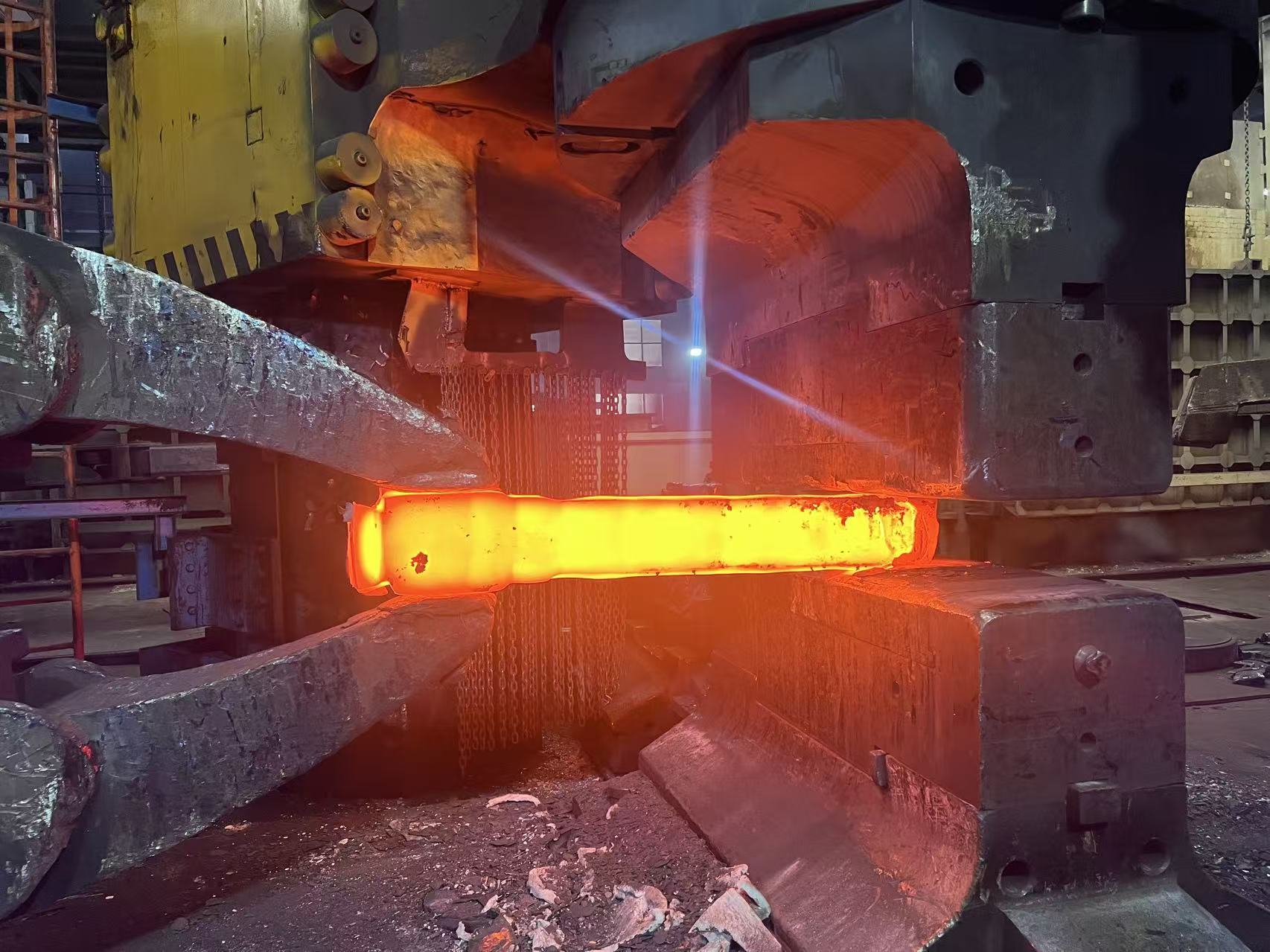
Manufacturing Process of Nickel-Based Alloy Ingots
December 23, 2025
1. Raw Material Selection and Control
The manufacturing process begins with the selection of high-purity primary materials, including electrolytic nickel and carefully specified alloying elements such as chromium, molybdenum, cobalt, iron, aluminum, titanium, and niobium. All incoming materials undergo strict chemical analysis to ensure compliance with alloy design requirements. Special attention is paid to controlling trace impurities such as sulfur, oxygen, nitrogen, and hydrogen, as these elements can significantly affect hot workability, fatigue resistance, and long-term service performance.
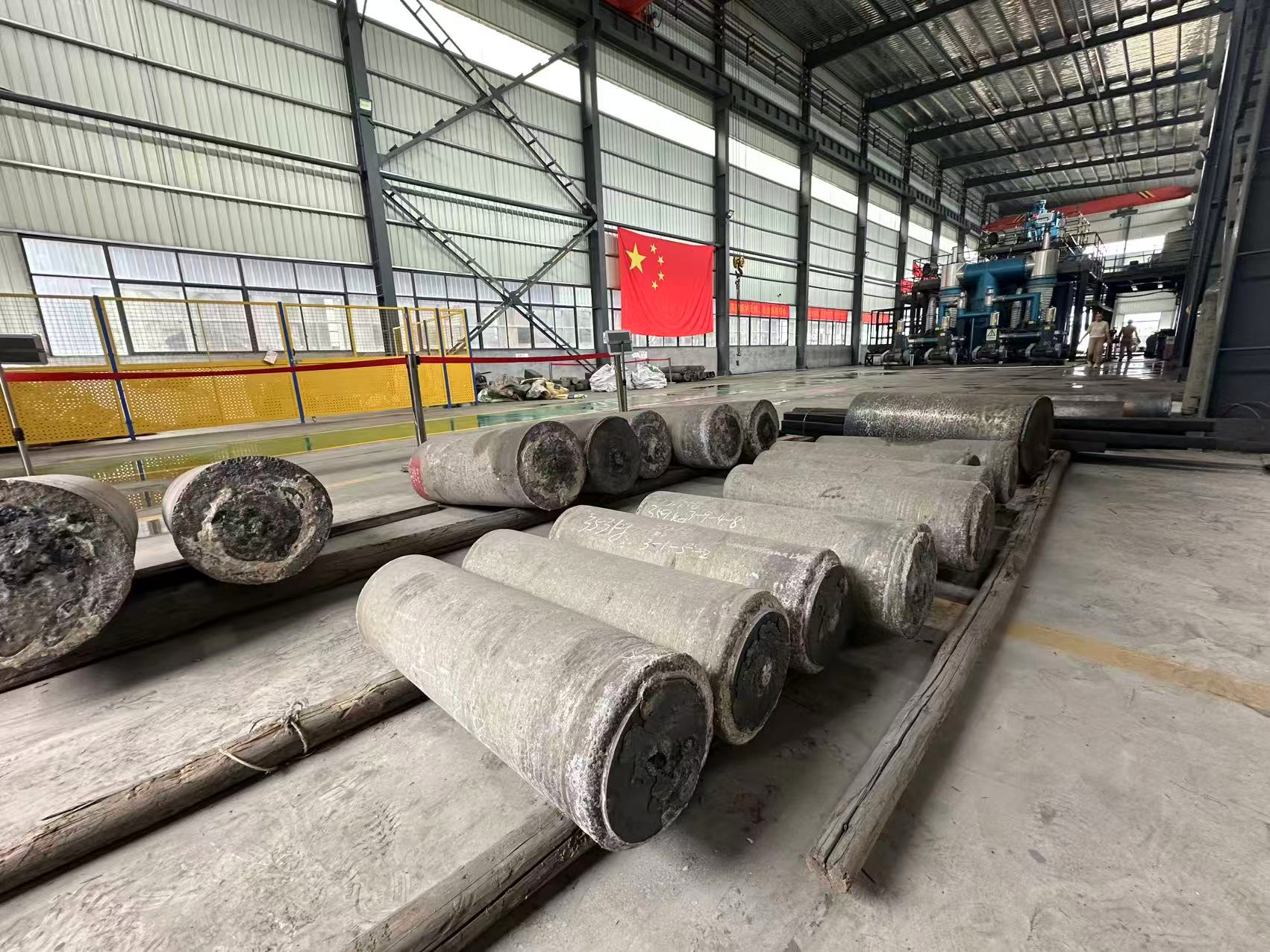
2. Vacuum Melting and Metallurgical Refining
Nickel-based alloy ingots are typically produced using advanced vacuum melting technologies to achieve superior cleanliness and compositional accuracy. Vacuum Induction Melting (VIM) is used for precise alloying and melt homogenization, while secondary refining processes such as Electroslag Remelting (ESR) or Vacuum Arc Remelting (VAR) are applied to further reduce non-metallic inclusions and macro-segregation. These refining steps enhance ingot density, improve microstructural uniformity, and ensure stable mechanical properties, particularly for high-temperature and high-stress applications.
3. Casting and Solidification Management
After refining, the molten alloy is cast into molds under vacuum or inert gas protection to prevent oxidation and contamination. Carefully controlled pouring parameters and cooling rates are applied to regulate solidification behavior. Proper solidification control minimizes shrinkage cavities, centerline segregation, and porosity, resulting in a sound ingot structure with uniform grain distribution, which is essential for subsequent forging, rolling, or extrusion processes.
4. Heat Treatment and Surface Conditioning
Following solidification, ingots undergo homogenization heat treatment at elevated temperatures to reduce elemental segregation and stabilize the microstructure. This step improves hot workability and ensures consistent mechanical performance. Surface conditioning processes such as grinding, machining, or peeling are then carried out to remove surface defects, cracks, and segregation layers, ensuring the ingot meets dimensional and surface quality requirements for downstream processing.
Summary
Nickel-based alloy ingots are manufactured through a highly controlled process involving high-purity raw materials, advanced vacuum melting and refining techniques, precise casting and solidification control, and comprehensive heat treatment and surface conditioning. This integrated process ensures excellent metallurgical quality, uniform microstructure, and reliable performance, making nickel-based alloy ingots ideal for critical applications in aerospace, power generation, oil and gas, and chemical processing industries.
FAQs
What are high-temperature alloys made of?
Nickel, cobalt, or titanium are regularly used to craft high-temperature alloys. These metals can withstand highly high warmth without losing strength.
Why are high-temperature alloys used in jet engines?
Jet engines create severe warmth once they burn gas. High-temperature alloys are used because they may resist melting and remain robust under these conditions.
Can high-temperature alloys be utilized in spacecraft?
Yes, high-temperature alloys are essential in spacecraft. They are used for elements like high-temperature shields and rocket engines, which face extreme heat and are bloodless.