Seamless Steel Pipe Technology: From Production to Application
November 11, 2025
Seamless steel pipes are a type of tubular product made from solid billets without any welded joints. Their uniform structure and superior mechanical properties make them widely used in industries such as oil and gas, petrochemical, power generation, automotive, and construction. Due to their high strength, pressure resistance, and reliability, seamless pipes have become a key material in modern industrial applications.

Production Process
The manufacturing of seamless steel pipes involves several precise and high-temperature processes to ensure product integrity and performance consistency:
-
Billet Preparation:
High-quality round steel billets are carefully selected, cut to length, and inspected for surface defects. -
Heating:
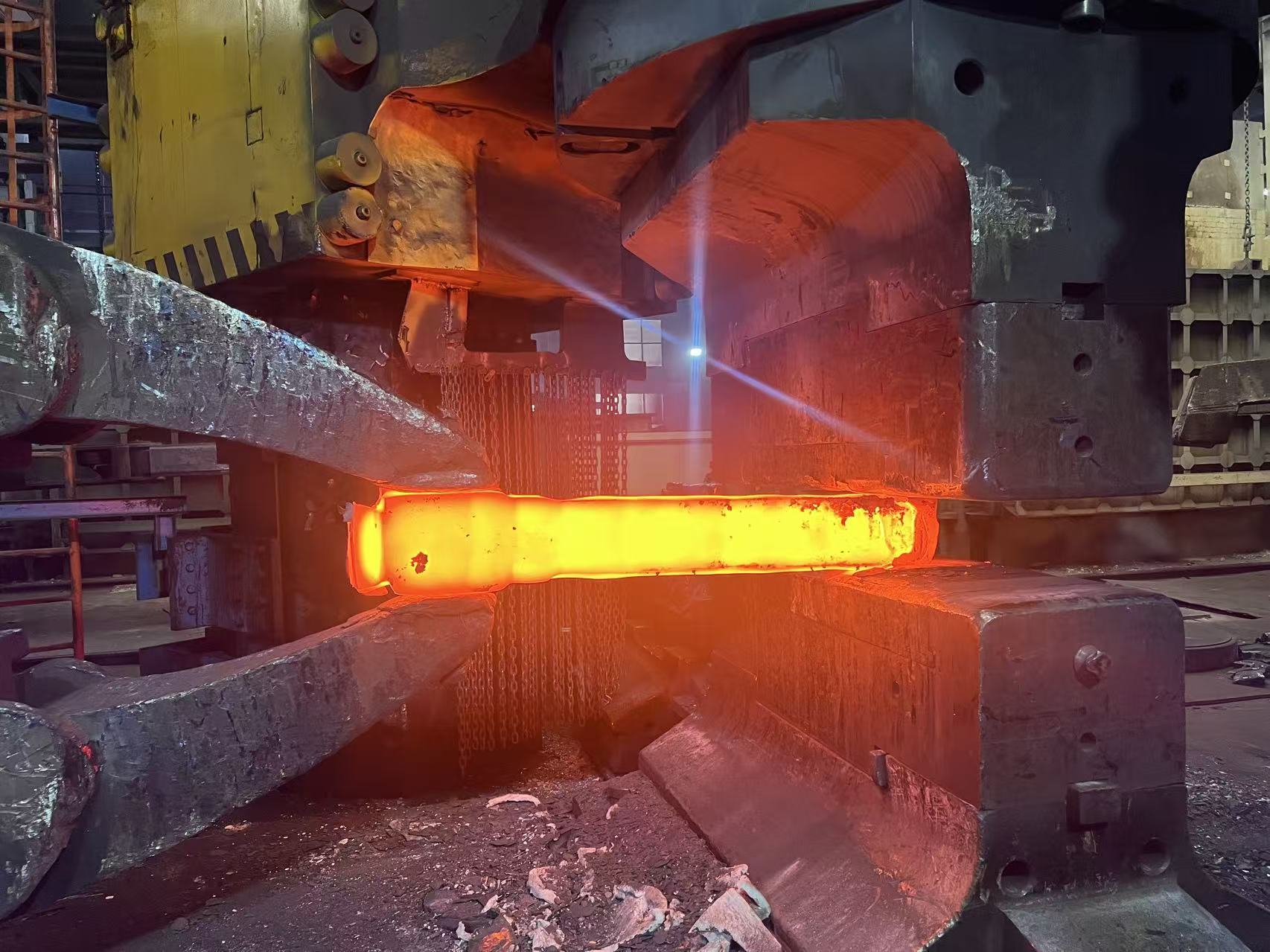
The billets are heated to around 1200°C in a rotary furnace to achieve the desired plasticity for piercing. -
Piercing (Hot Rolling):
The heated billet is pierced using a piercing mill to create a hollow tube shell. This is a critical step that determines the internal quality of the pipe. -
Elongation and Rolling:
The pierced shell is elongated and rolled through plug mills or mandrel mills to achieve the required diameter and wall thickness. This process refines the grain structure and improves mechanical strength. -
Sizing and Straightening:
After rolling, pipes are sized to precise dimensions and straightened to ensure roundness and uniformity. -
Heat Treatment:
Pipes are normalized or quenched and tempered to enhance their mechanical properties and ensure structural stability. -
Testing and Inspection:
Non-destructive testing methods such as ultrasonic testing, eddy current testing, and hydrostatic testing are applied to ensure there are no cracks, inclusions, or leaks.
Key Characteristics
Seamless steel pipes possess several distinct physical and mechanical characteristics:
High Strength and Durability:
Excellent resistance to pressure, stress, and mechanical deformation under extreme conditions.
Uniform Structure:
The absence of welds eliminates weak points, ensuring uniform stress distribution throughout the pipe.
Superior Surface Finish:
Advanced manufacturing ensures smooth internal and external surfaces, reducing friction loss in fluid transportation.
Wide Range of Sizes and Grades:
Can be produced in various diameters, thicknesses, and materials (carbon
steel, alloy steel, stainless steel) to meet diverse industrial
requirements.
Advantages of Seamless Steel Pipes
Compared to welded pipes, seamless steel pipes offer multiple advantages that make them the preferred choice in critical applications:
-
Higher Pressure and Temperature Resistance:
Seamless pipes can withstand higher pressures and temperatures, making them ideal for high-pressure boilers, heat exchangers, and pipelines. -
Better Mechanical Integrity:
Without weld seams, they exhibit superior strength and fatigue resistance, minimizing the risk of failure under cyclic loads. -
Improved Corrosion Resistance:
When manufactured from alloy or stainless steel, they show enhanced resistance to corrosion and oxidation, suitable for harsh environments. -
Precision and Reliability:
Dimensional accuracy and consistent wall thickness improve system efficiency and reliability. -
Longer Service Life:
The combination of strength, stability, and resistance to environmental degradation extends operational lifespan, reducing maintenance costs.
Applications
Seamless steel pipes are used extensively in:
Oil and Gas Industry: Drilling, transportation, and high-pressure pipelines.
Power Plants: Boiler tubes, heat exchangers, and superheaters.
Automotive Industry: Precision tubes for mechanical and hydraulic systems.
Construction: Structural and mechanical tubing for load-bearing applications.
Chemical Processing: High-temperature and corrosive fluid transportation systems.
Conclusion
Seamless steel pipes represent a critical advancement in steel manufacturing technology. Their superior strength, reliability, and ability to operate under extreme conditions make them indispensable across a wide range of industries. As production technologies continue to evolve, seamless steel pipes will remain a cornerstone material supporting global infrastructure and industrial innovation.
FAQs
What are high-temperature alloys made of?
Nickel, cobalt, or titanium are regularly used to craft high-temperature alloys. These metals can withstand highly high warmth without losing strength.
Why are high-temperature alloys used in jet engines?
Jet engines create severe warmth once they burn gas. High-temperature alloys are used because they may resist melting and remain robust under these conditions.
Can high-temperature alloys be utilized in spacecraft?
Yes, high-temperature alloys are essential in spacecraft. They are used for elements like high-temperature shields and rocket engines, which face extreme heat and are bloodless.